
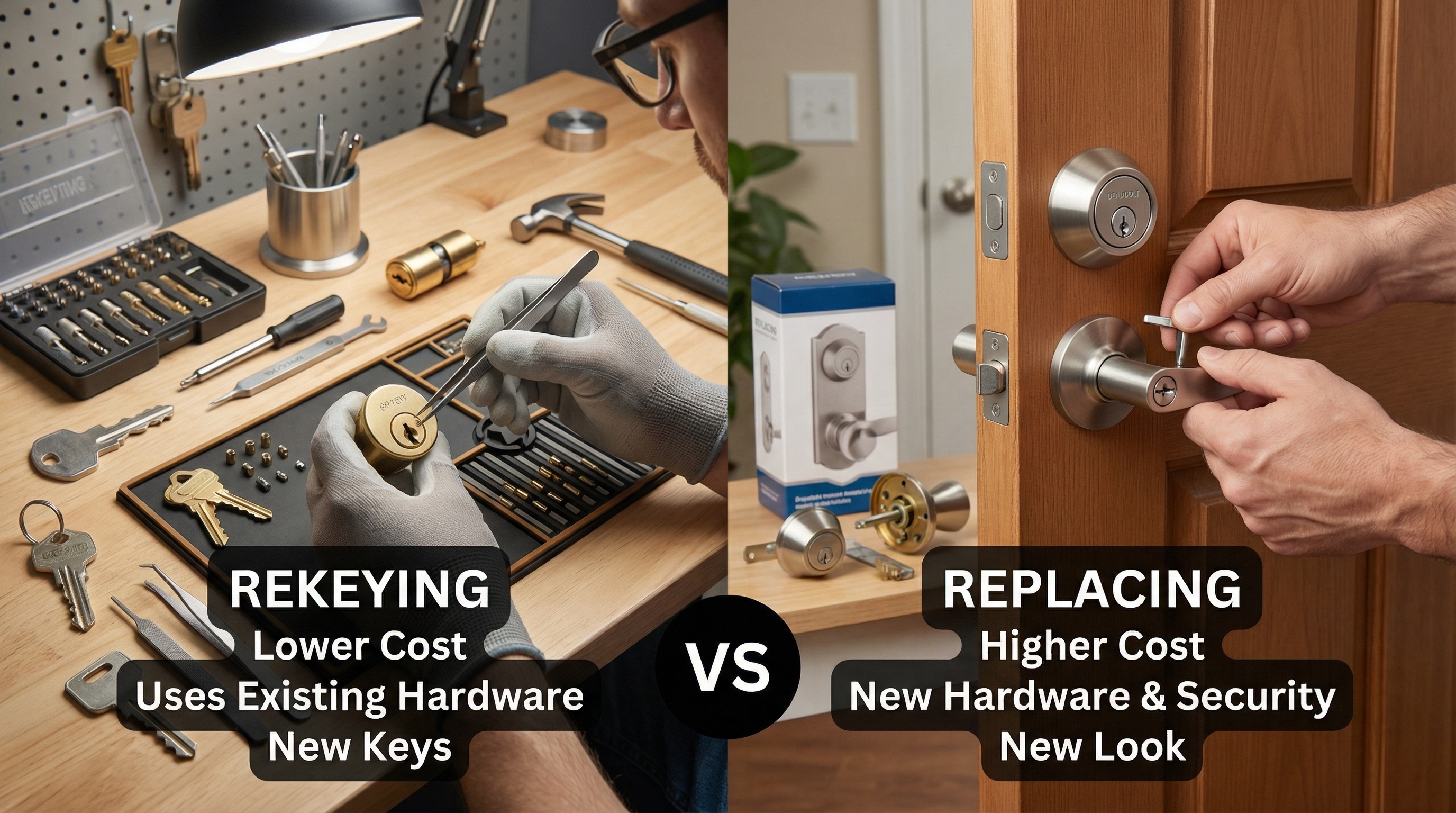
You've moved into a new home, ended a relationship, or lost your keys. You know you need to do something about your locks, but should you rekey them or replace them entirely? This guide breaks down both options so you can make the right choice for your situation and budget.
What is Rekeying?
Rekeying changes the internal pins of your existing lock so that old keys no longer work. The lock hardware stays the same - only the key combination changes. A locksmith removes the lock cylinder, replaces the pins with new ones of different sizes, and cuts new keys to match.
Think of it like changing the password on your computer. The computer is the same, but now you need a different password to log in.
What is Lock Replacement?
Lock replacement means removing the entire lock - deadbolt, knob, or handle - and installing a completely new unit. You get new hardware, new keys, and potentially upgraded security features.
Quick Comparison
| Factor | Rekeying | Replacing |
|---|---|---|
| Cost | $15-$25 per lock (labor only) | $75-$250+ per lock (parts + labor) |
| Time | 5-10 minutes per lock | 15-30 minutes per lock |
| Hardware | Stays the same | Brand new |
| Security Level | Same as before | Can upgrade |
| Appearance | Unchanged | New look available |
When to Rekey Your Locks
You Just Moved In
Previous owners, real estate agents, contractors, and who knows who else might have keys to your new home. Rekeying is the fastest, cheapest way to ensure you're the only one with access.
Keys Were Lost or Stolen
If you can't account for all copies of your keys, rekeying eliminates the risk of someone using a found or stolen key.
After a Roommate or Tenant Leaves
Even if they returned all keys, copies might exist. Rekeying is cheaper than changing locks every time someone moves out.
After a Breakup or Divorce
When relationships end, rekeying provides peace of mind without the expense of full replacement.
You Want All Locks on One Key
A locksmith can rekey all your locks (front door, back door, garage door, etc.) to work with a single key - extremely convenient if you're tired of a bulky keychain.
Pro Tip: New Home Checklist
When you close on a new home, have a locksmith rekey all exterior locks on move-in day. It's one of the most cost-effective security measures you can take.
When to Replace Your Locks
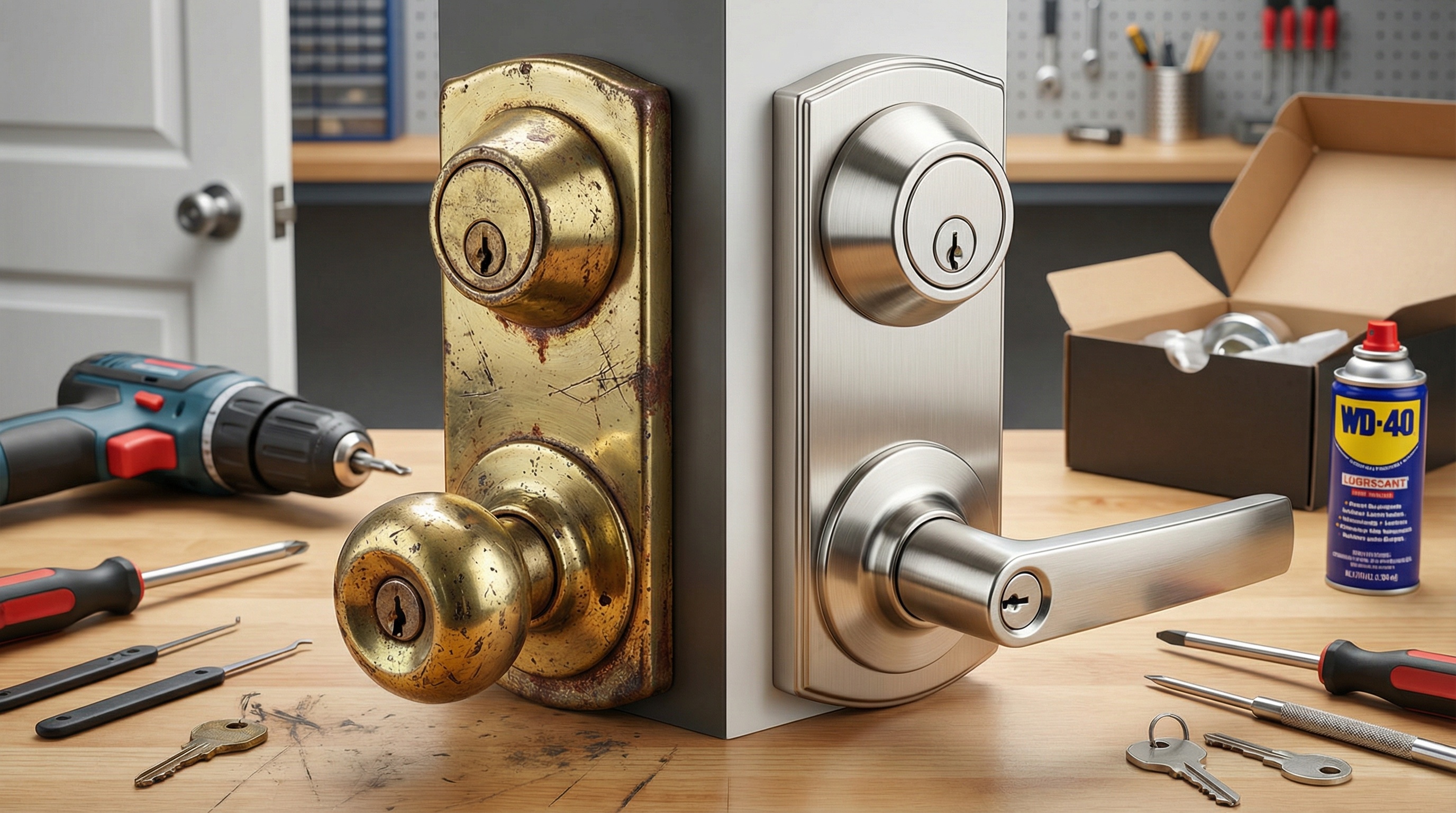
Locks Are Damaged or Worn
If your key sticks, the lock feels loose, or the mechanism is failing, replacement is the only real fix. Rekeying worn locks just changes which broken key you'll use.
Locks Are Old or Low-Quality
Builder-grade locks often use cheap materials and basic security. Upgrading to a quality Grade 1 or Grade 2 deadbolt provides better protection.
You Want Better Security
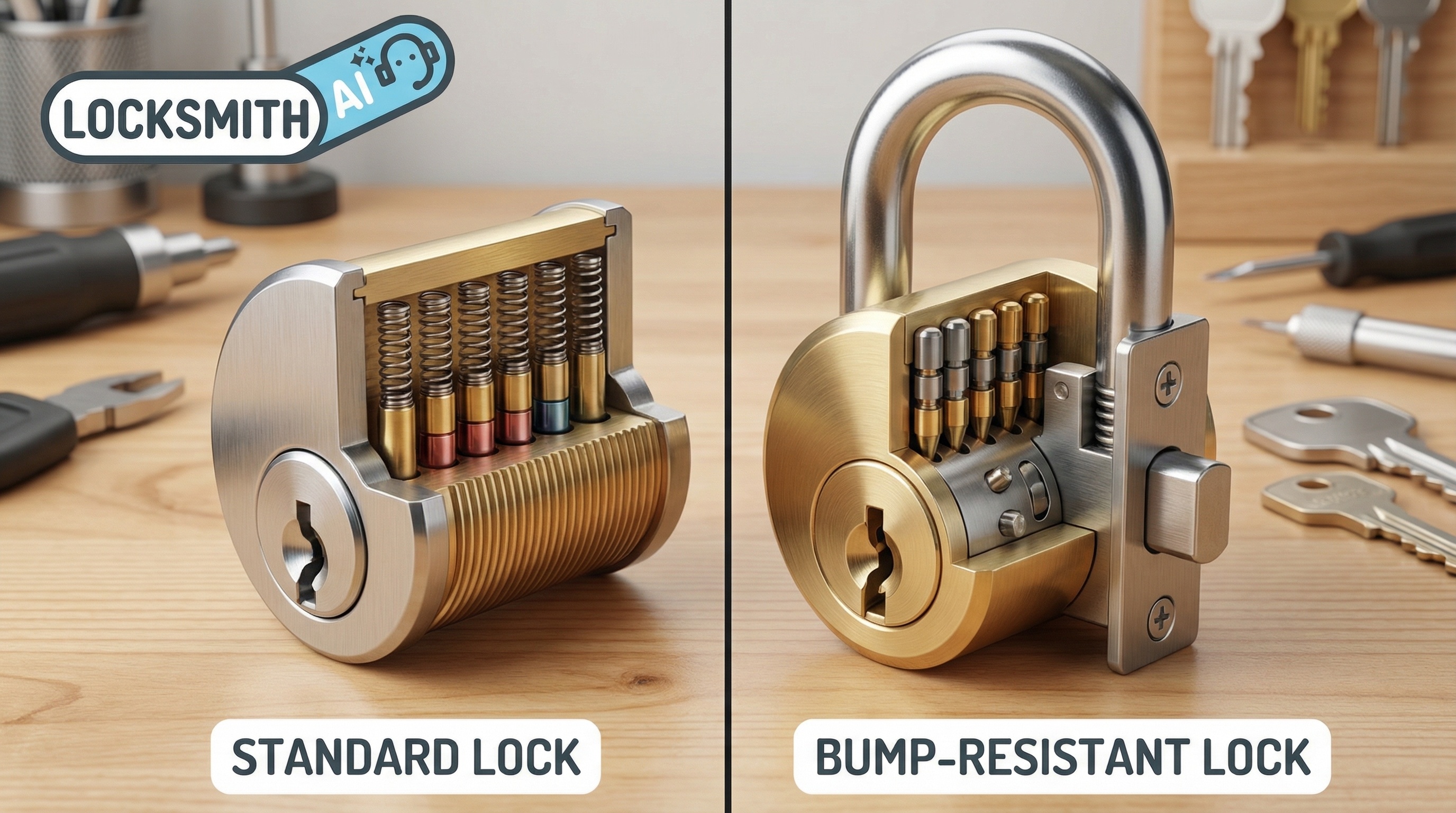
Rekeying can't add security features. If you want bump-resistant pins, anti-pick technology, smart lock features, or reinforced strike plates, you need new hardware.
After a Break-In
If your home was burglarized, replacement is usually the better choice. The existing locks may be compromised, and upgrading sends a message that security has improved.
Aesthetic Upgrade
Brass locks with oak cabinets? Sometimes style matters. Replacement lets you match your hardware to your home's design.
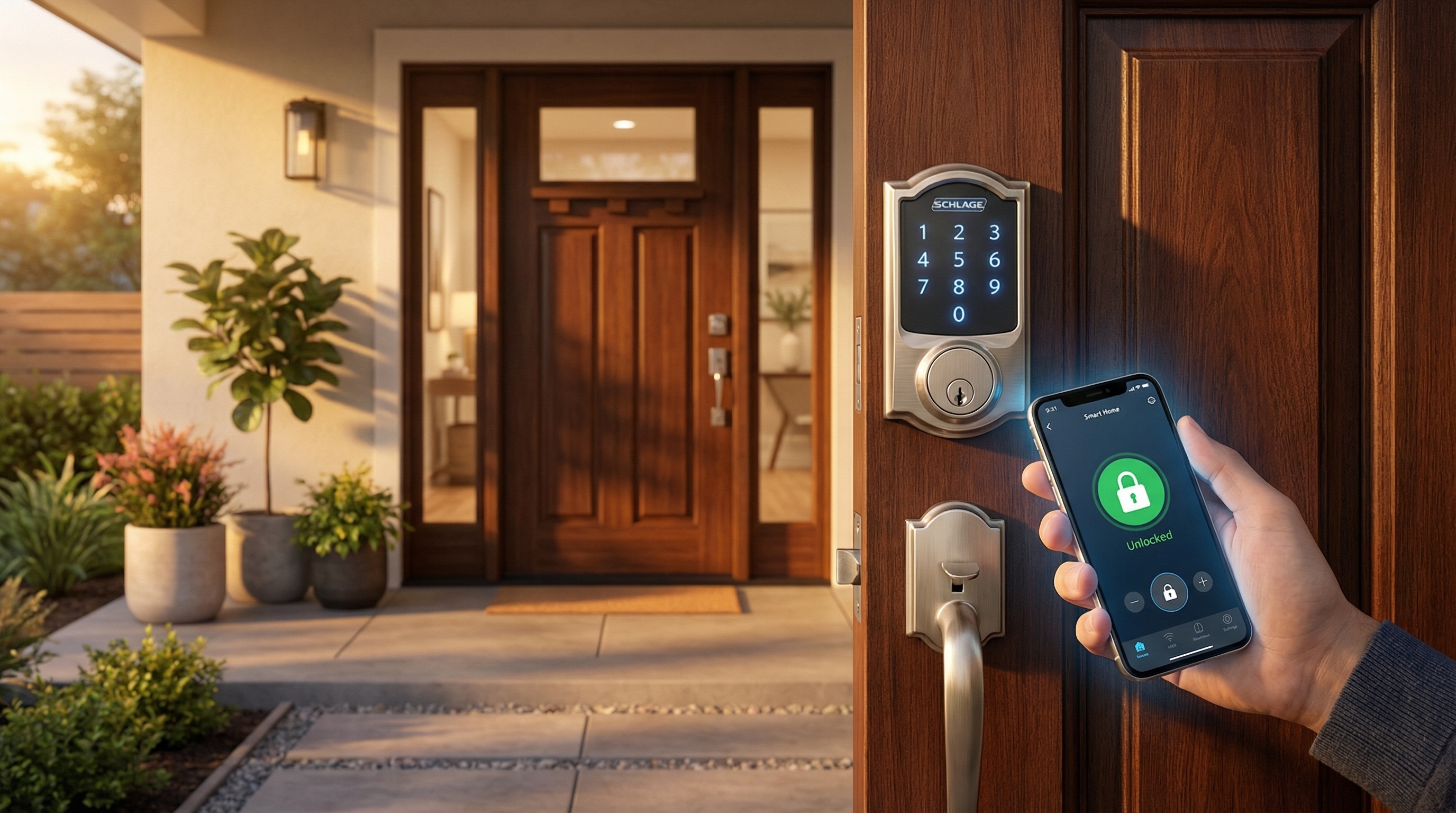
Adding Smart Home Features
Want keyless entry, remote access, or activity logs? That requires replacing traditional locks with smart lock hardware.
Not Sure Which You Need?
Our technicians can assess your current locks and recommend the most cost-effective solution for your situation.
Cost Breakdown
Rekeying Costs
- Service call: $50-$75 (waived if multiple locks)
- Per lock: $15-$25
- Extra keys: $2-$5 each
- Example: 4 locks rekeyed = approximately $100-$150
Lock Replacement Costs
- Budget deadbolt (Grade 3): $50-$100 installed
- Quality deadbolt (Grade 2): $100-$175 installed
- High-security lock (Grade 1): $175-$300 installed
- Smart lock: $200-$400+ installed
- Example: 4 quality deadbolts = approximately $400-$700
DIY Considerations
DIY Rekeying
Kwikset SmartKey and some Schlage locks allow DIY rekeying with a special tool. However, this only works if you have the current working key. If keys are lost, you'll need a locksmith.
DIY Lock Replacement
Replacing a deadbolt with another deadbolt of the same size is straightforward. But if hole sizes differ, door modifications may be needed - that's when calling a pro makes sense.
The Bottom Line
- Choose rekeying when your locks work fine but you want to invalidate existing keys
- Choose replacement when locks are damaged, outdated, or you want upgraded security features
- Consider both if you have a mix of good locks and bad locks - rekey the good ones, replace the rest
Most locksmiths can assess your locks during a single visit and perform whichever service makes sense. The goal is getting you secure without overspending.