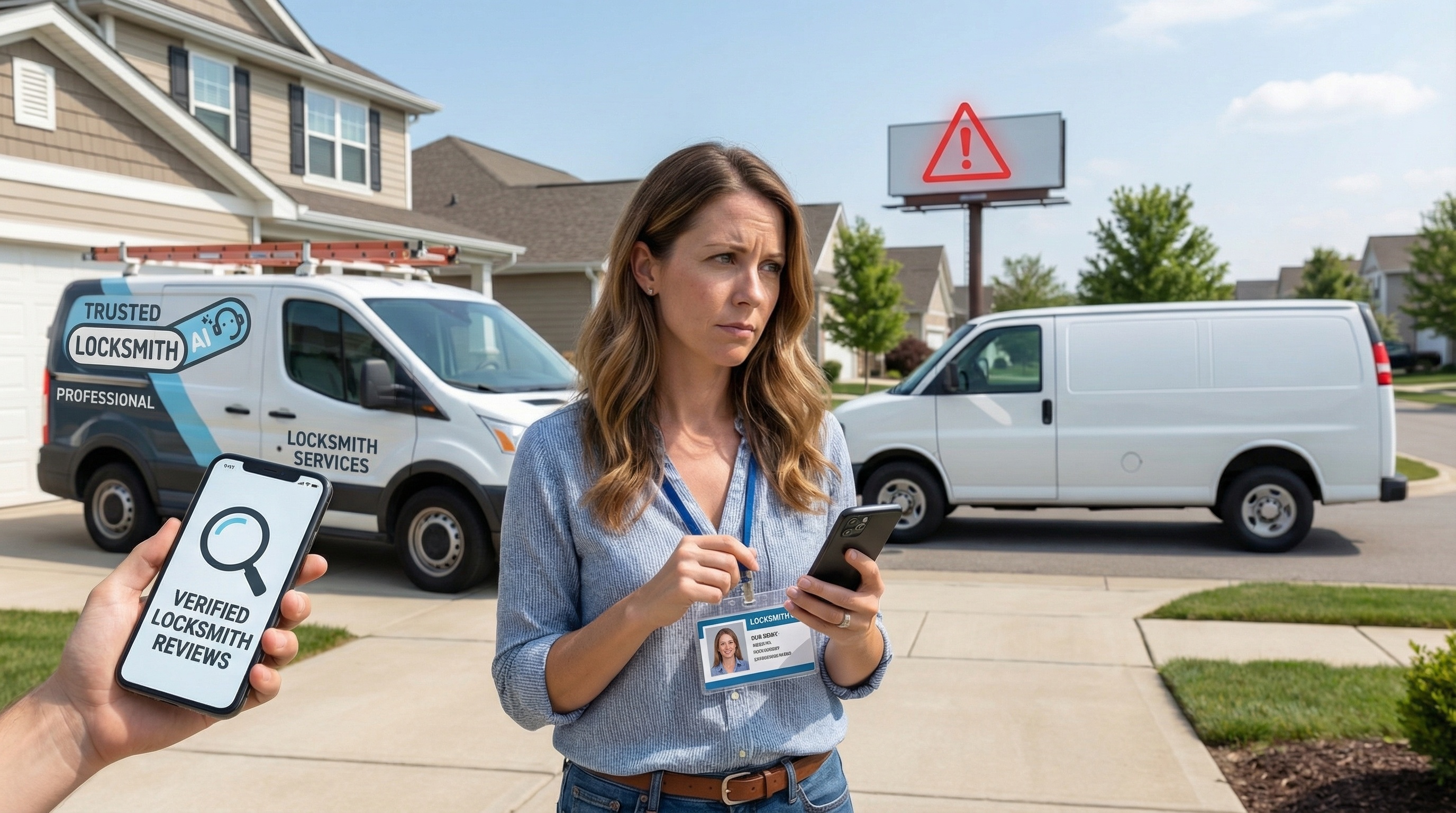
Being locked out is stressful enough without falling victim to a scam locksmith. Unfortunately, the locksmith industry has attracted fraudulent operators who prey on people in vulnerable situations. The good news: knowing the warning signs makes you much harder to exploit.
How Locksmith Scams Work
The typical scam follows a pattern:
- You search "locksmith near me" in a panic
- You find a number advertising "$15-$29 service" with a local-sounding name
- A dispatcher answers, quotes a low price, and sends "a technician"
- An unmarked car arrives with an unskilled worker who damages your lock
- They claim the lock needs replacement (it often didn't)
- The final bill is $300-$500+ with threats to call police if you don't pay
These operations often run call centers that appear as dozens of different "local" companies online.
Red Flags to Watch For
Extremely Low Quote
Prices like "$15 lockout" are bait. Legitimate locksmiths have overhead: tools, vehicles, insurance, training. A realistic emergency lockout starts around $50-$75 minimum.
Generic Business Name
"Local Locksmith" or "City Lock & Key" with no verifiable business history often signal a scam operation using generic names to avoid accountability.
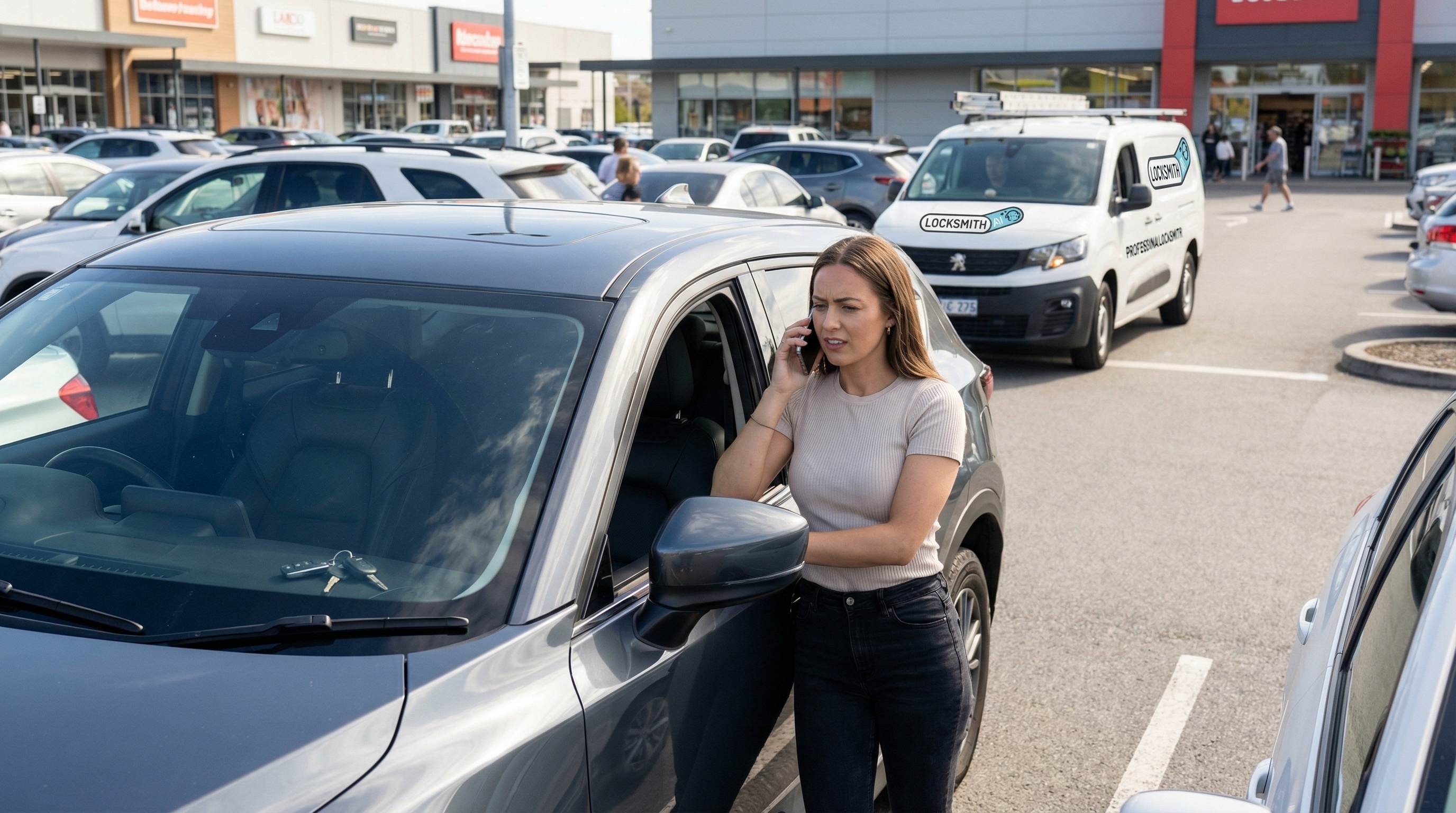
No Company Vehicle
Legitimate locksmiths invest in marked work vehicles. Someone arriving in a personal car with no tools visible should raise concerns.
Cannot Provide a Written Estimate
Scammers avoid written quotes because they plan to inflate the price. A professional will provide an estimate before starting work.
Immediate Claim Lock Must Be Drilled
A skilled locksmith can open most residential locks non-destructively. If drilling is the first suggestion, they may lack skill or want to sell you a new lock.
Cash-Only Demands
Legitimate businesses accept credit cards. Cash-only demands, especially combined with threats, indicate a scam.
Signs of a Legitimate Locksmith
Verifiable Business Presence
A real address, established Google Business profile with reviews over time, and a website with staff photos and company history.
Licensed and Insured
Ask for their license number (in states that require licensing) and proof of insurance. Professionals carry documentation.
Branded Vehicle and Uniform
Investment in professional appearance indicates a real business with accountability.
Upfront, Written Pricing
They provide a price range or estimate before arriving and confirm it before starting work.
Professional Credentials
Membership in ALOA (Associated Locksmiths of America) or state associations indicates professional commitment.
Prevention is Best
Research and save a trusted locksmith's number in your phone BEFORE you need one. When you're stressed and locked out is the worst time to vet companies.
What to Do If You Suspect a Scam
Before They Start Work
- Ask to see their locksmith license and photo ID
- Request a written estimate with company name and contact info
- If anything feels wrong, tell them you'll wait for another locksmith
- They cannot legally prevent you from refusing service
During the Job
- Question why they need to drill if they haven't tried non-destructive entry
- Document everything: take photos, record the license plate
- If the price suddenly increases, refuse and call police if threatened
After Being Scammed
- File a police report
- Report to your state's consumer protection office
- Leave detailed online reviews to warn others
- Dispute the charge with your credit card company if applicable
- Report to the BBB and FTC
Need a Trusted Locksmith?
LocksmithAI is a network of licensed, vetted professionals. Fair pricing, no surprises, guaranteed.
How to Find a Legitimate Locksmith
- Get recommendations - Ask friends, family, or your local hardware store
- Check Google reviews carefully - Look for detailed reviews over time, not just 5-star generics
- Verify their address - Use Google Street View to confirm it's a real business location
- Call and ask questions - Legitimate businesses answer professionally and provide clear information
- Verify licensing - Check your state's license verification database if applicable
Final Thoughts
The vast majority of locksmiths are honest professionals who take pride in their work. Scammers tarnish the entire industry's reputation, which is why legitimate locksmiths are often happy to prove their credentials.
A few minutes of verification can save you hundreds of dollars and a lot of frustration. When in doubt, wait for a locksmith you can verify - even if it takes a bit longer.